
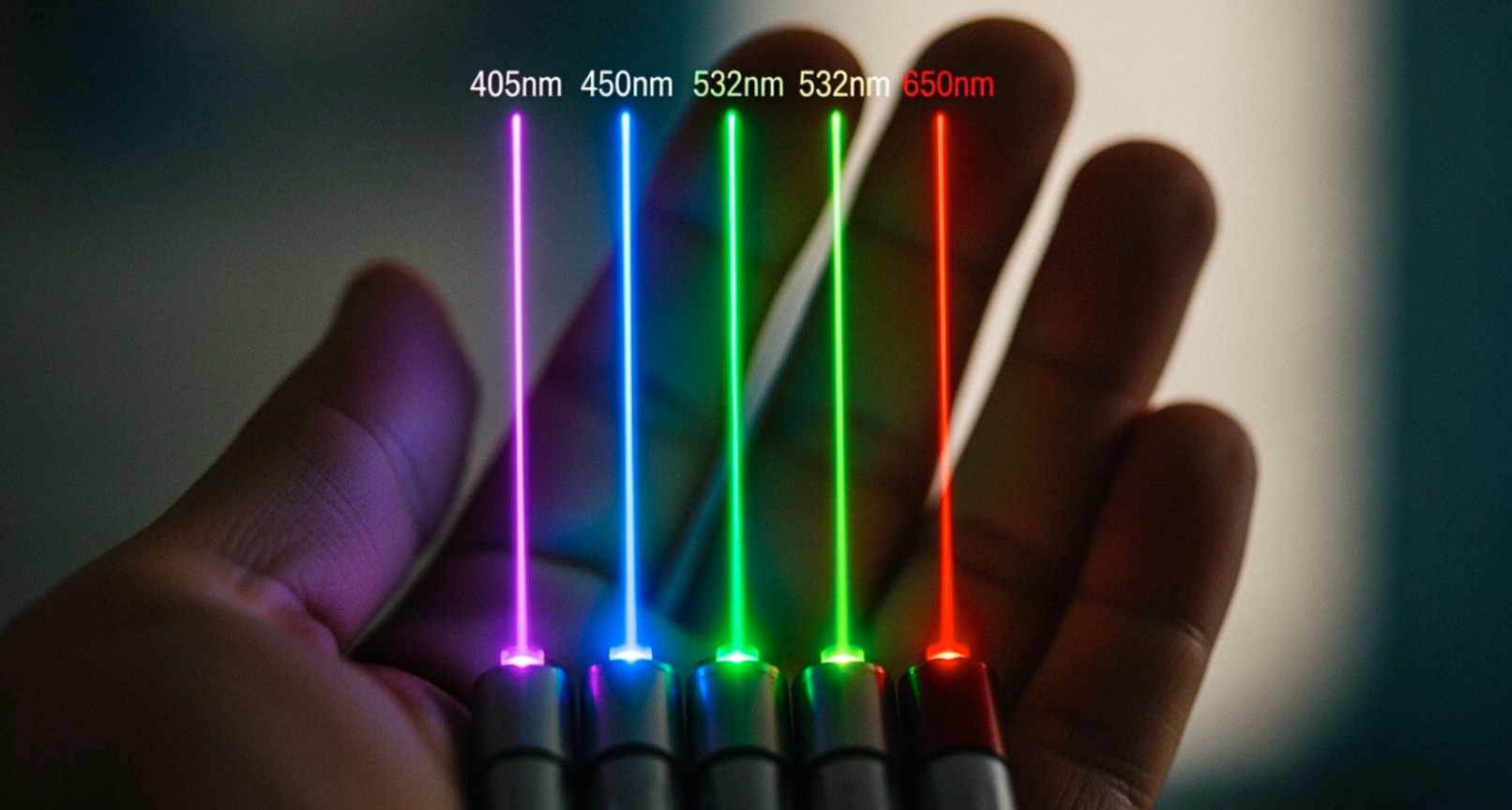
If you're looking for the best laser pointer for presentations and outdoor use, Hgyuskl offers premium options tailored to your needs. For professional settings, a laser pointer for presentations featuring Red laser pointers and Standard red lasers at 650nm ensures safety and reliable performance, making them an excellent choice for you and your team. When it comes to outdoor applications, Green laser pointers and High-visibility green lasers at 532nm provide exceptional brightness and visibility, perfect for guiding groups or pointing out features in any environment.
Key Takeaways
-
Green wavelengths such as 520nm and 532nm are usually more visible to the human eye, but higher visibility also means stricter safety discipline is needed.
-
Red 650nm lasers are common for indoor presentations, but safety still depends on output power and laser class.
-
405nm violet and 450nm blue lasers are more specialized and are usually not the best default choice for standard presentations.
-
Never aim a laser at eyes, people, animals, vehicles, or aircraft.
-
Before buying a laser pointer, check wavelength, output power, laser class, label information, and local regulations.
Wavelength Comparison Table

Picking the right laser pointer depends on its wavelength. Each color works better in different places. If you choose a Hgyuskl model, check the product page for wavelength, output power, laser class, material, battery type, operating temperature, runtime, and safety labeling.
Product features can vary from model to model.
|
Wavelength |
Color |
Typical Visibility |
Common Use |
Main Caution |
|
405nm |
Violet |
Low to moderate, often dim to the eye |
Fluorescence, lab-style demonstrations |
Can still be hazardous; low perceived brightness may lead users to underestimate risk |
|
450nm |
Blue |
Moderate |
Visual effects, technical demos |
Eye safety depends on power and exposure |
|
520nm |
Green |
Very high |
High-visibility pointing, outdoor visibility |
Very visible; avoid eyes, vehicles, aircraft |
|
532nm |
Green |
Very high |
Presentations, astronomy-style pointing, demonstrations |
Some DPSS green lasers may have IR leakage if poorly filtered |
|
650nm |
Red |
Good indoors, weaker outdoors |
Standard presentations |
Common and practical, but not automatically safe at higher power |
Do not judge safety by color alone. Always check output power, laser class, beam quality, and product labeling.
Indoor vs Outdoor Suitability
-
405nm (Violet): This color looks dim inside. It is hard to see outside. It is best for science labs.
-
450nm (Blue): Blue lasers work for presentations. They are not as bright as green or red. They are easier to see at night outside.
-
520nm/532nm (Green): Green lasers are easy to see everywhere. They are great for stargazing, safety, and animal control.
-
650nm (Red): Red lasers are good for presentations. They are easy to see inside and are safe to use.
Tip: Pick a green laser pointer for the brightest outdoor beam. Pick a red laser pointer for safe and clear presentations.
Visibility and Safety Summary
You need to think about both how bright and how safe the laser is. Green lasers (520nm/532nm) are the brightest. They are best for using outside. Red lasers (650nm) are safe and work well in classrooms and meetings. Hgyuskl uses strong aluminum and special drives for steady power and long life. Always use lasers safely to protect your eyes and others.
Laser Pointer for Presentations: Wavelengths and Performance
Picking the right laser pointer for presentations helps you share ideas. Each wavelength has its own good points for indoor use. You should think about how easy it is to see, how safe it is, if it works without wires, and how long the battery lasts before you pick one.
405nm (Violet) in Presentations
A 405nm violet laser pointer for presentations looks different because of its color. People use it for science shows or cool effects. But violet light is not bright for most people. It is hard to see in bright rooms. Safety is very important with violet lasers.
-
Never point the beam at anyone’s eyes.
-
Be careful when you use the laser and follow safety rules.
-
Buy from trusted brands to stay safe.
Note: Learning about violet laser dangers keeps you and others safe.
450nm (Blue) in Presentations
A 450nm blue laser pointer for presentations gives a bright blue beam. Blue lasers are good in dark rooms. You can use them for fun displays or tech talks.
-
Blue pointers often work without wires, so you can walk around.
-
The best ones are made with strong aluminum.
-
Look for proper labeling, output power information, laser class, manufacturer details, and applicable safety compliance statements. Do not describe a laser pointer as “FDA approved” unless the manufacturer provides specific, verifiable documentation.
Blue 450nm lasers can be visually distinctive, but they are usually not the default choice for standard presentations. Choose only low-power, properly labeled models and avoid direct or reflected eye exposure. Blue lasers are not as bright as green, but they look cool and different.
520nm (Green) in Presentations
A 520nm green laser pointer for presentations is very bright. Green wavelengths around 520–532nm usually appear much brighter to the human eye than red wavelengths at the same output power, which makes them easier to see but also more likely to cause distraction or accidental exposure.
-
People see green light easily, so your audience will notice it fast.
-
Green lasers work well in sunlight and far away.
-
You can use them in classrooms, meetings, or big halls.
Tip: Pick a green laser pointer for presentations if you want everyone to see it.
532nm (Green) in Presentations
A 532nm green laser pointer for presentations is great for big rooms. The beam is bright and clear in any indoor place.
-
Green lasers are good for teaching and business meetings.
-
Good build is important. Choose strong lasers to avoid battery and heat problems.
|
Consideration |
Details |
|
Brightness |
532nm green lasers are bright enough for indoor presentations and educational demonstrations. |
|
Suitability for Indoor Use |
They are particularly effective in indoor settings, making them ideal for conference rooms. |
|
Build Quality and Safety |
Importance of choosing well-built lasers to avoid issues like loose battery compartments and poor thermal contact. |
|
Power Limitations |
At higher power levels, the design compromises become significant, affecting usability. |
Safety matters a lot. Green lasers are very bright, so do not point them at eyes. Rules for green lasers are stricter than for red lasers.
Some 532nm green laser pointers are DPSS lasers and may emit unwanted infrared radiation if poorly designed or not properly filtered. This is one reason to buy only from reputable sellers and check product specifications carefully.
650nm (Red) in Presentations
A 650nm red laser pointer for presentations is a classic pick. Red lasers are safe and easy to see inside.
-
You can use them in class, meetings, and business talks.
-
Red lasers are safer for eyes than green lasers.
-
Battery life can be a problem. Strong red lasers use up batteries fast, which is tough for long talks.
Tip: Bring extra batteries if you use a red laser pointer for presentations.
Red lasers work well and are safe. They do not cost much and follow most rules.
When you pick a laser pointer for presentations, think about your room size, how bright you need it, and how long you will use it. Hgyuskl sells pro tools with good wireless use and strong batteries. Get a better presentation laser pointer to make sure everyone sees your message.
Outdoor Laser Pointer Use: Wavelengths and Applications
When you use your laser pointer outside, things change. Sunlight is bright and makes beams hard to see. You need to think about safety rules. Hgyuskl makes strong laser pointers with good materials. You can use them for astronomy, survival, animal control, and work. Each wavelength is best for different outdoor jobs.
405nm (Violet) Outdoors
A 405nm violet laser pointer looks special outside. It is not very bright in sunlight. The beam is hard to see during the day. This makes it less helpful for outdoor talks or signals. Violet lasers are good for science projects or showing glowing materials.
-
Violet lasers are good for:
-
Showing glowing rocks or minerals.
-
Lab jobs where you want less distraction.
-
Teaching science with cool glowing effects.
-
Violet lasers are not good for:
-
Astronomy tours in the day.
-
Outdoor survival signals.
-
Big group talks outside.
Tip: Use violet lasers only for special science or lab jobs. For most outdoor uses, pick a brighter color.
450nm (Blue) Outdoors
A 450nm blue laser pointer gives a cool blue beam. Blue lasers are easier to see at night than in the day. Animals do not notice blue light much. Blue lasers are not great for scaring birds or animals.
|
Laser Color |
Effectiveness for Wildlife Control |
|
Blue |
Wildlife does not see blue well |
|
Green |
Green scares birds better |
You must know the rules for blue lasers. Many places limit the power of blue lasers, especially near airports or crowds.
Laser pointer laws vary by country and region. Some jurisdictions restrict handheld lasers above certain power levels, especially in public places or near airports.
Before using a laser pointer outdoors, check local laws and the product’s output power and class.
Note: Always check local laws before using a blue laser pointer outside. Never point lasers at planes or cars.
520nm (Green) Outdoors
A 520nm green laser pointer is easy to see outside. People see green light best, especially at 520-532nm. Green lasers are the top choice for outdoor use.
-
Green lasers are great for:
-
Astronomy and stargazing. You can point out stars with a bright beam.
-
Do not use a laser pointer as an aircraft signal. For emergencies, use approved signaling devices and follow local rescue guidance. Never aim a laser at aircraft, vehicles, or people.
-
For outdoor use, keep the guide focused on visibility, demonstrations, astronomy-style pointing, and safety. Do not recommend laser pointers for disturbing animals or wildlife.
-
Work. Hgyuskl 520nm green lasers last longer and work well in cold.
Tip: Pick a 520nm green laser pointer for the brightest outdoor use. Hgyuskl’s tough design keeps your laser working in hard places.
532nm (Green) Outdoors
A 532nm green laser pointer gives the brightest beam outside. Your eyes see this color best, even in daylight. 532nm lasers are best for astronomy, group tours, and outdoor talks.
-
Green lasers at 532nm are:
-
Very easy to see, even in bright light.
-
Good for pointing out stars, guiding groups, and emergency signals.
-
Useful for animal control, as birds notice green light.
-
Safety matters a lot. Green lasers are very bright, so use them carefully. Never point the beam at people, animals, or planes.
|
Aspect |
Details |
|
Rules are strict because lasers can hurt eyes. |
|
|
Eye Injury Risks |
Strong lasers can cause bad eye injuries. |
|
Visibility of Green Lasers |
Green lasers at 532nm are much brighter than red lasers, so accidents can happen. |
|
Safety Guideline |
Description |
|
Beam Direction |
Do not aim lasers at or near planes. |
|
FAA Notification |
For ordinary consumer use, the key rule is simple: never aim a laser at or near aircraft. If a laser activity could project into navigable airspace, professional review and local authority requirements may apply. |
|
Approval for Certain Uses |
Some uses need FAA review and approval. |
|
Termination of Beams |
If beams hit surfaces and do not go into airspace, you do not need to report. |
Alert: Always follow safety rules. Never aim your laser pointer at the sky near airports.
650nm (Red) Outdoors
A 650nm red laser pointer is a classic tool. Red lasers are less bright than green ones outside, especially in sunlight. You can use red lasers for close signals or pointing, but they do not work well for far distances or bright light.
-
Red lasers are:
-
Cheap and last a long time.
-
Good for short jobs in low light.
-
Not great for emergency signals or astronomy.
-
Green lasers are much brighter outside. If you need to signal or guide a group, use a green laser pointer.
Tip: Use red lasers for simple outdoor jobs. For best visibility, get a green laser pointer from Hgyuskl.
Always use laser pointers safely outside. Follow all safety rules, especially near airports. Hgyuskl makes every laser pointer strong and safe, so you can focus on your work or adventure.
Choosing a Presentation Laser Pointer
Best Wavelength for Presentations
You want your laser pointer to be easy to see. Green lasers at 520nm or 532nm are the brightest. People can see the green beam in big rooms. Red lasers at 650nm are also a good choice. They are safe and easy to see. Blue or violet lasers look cool but are not as bright. Hgyuskl makes their laser pointers strong and reliable. They use aviation aluminum and good diodes, so your pointer works well during important talks.
Tip: Pick green for the brightest beam. Choose red if you want a safer pointer for daily use.
Best Wavelength for Outdoor Use
You need a strong laser pointer for outside. Green lasers at 520nm or 532nm are very bright in sunlight. You can use them for stargazing, safety, or keeping animals away. Red lasers work best at night but are hard to see in the day. Hgyuskl uses tough materials for their laser pointers.
If outdoor durability matters, check whether the specific model lists an IP rating or other verified protection level. Do not assume that all laser pointers are waterproof.
|
Color |
Visibility |
Outdoor Use |
|
|
Green |
520–532 |
Extremely bright |
Astronomy, signaling |
|
Red |
650 |
Good at night |
Short-range pointing |
Other Factors to Consider
Think about more than just color when you pick a laser pointer. Battery life is important if you talk a lot. Wireless pointers let you walk around. Power level changes how bright and safe the pointer is. Hgyuskl uses good parts so their pointers last a long time. A good laser pointer helps you feel calm and do better in your talks. You will impress people every time you use it.
Note: Always follow safety rules and use your laser pointer the right way.
Safety Tips for Laser Pointer Use
Safe Use Indoors
You must use your laser pointer with care inside. Bright beams can distract or harm people. Always point your laser pointer away from faces and eyes. Choose a low-power setting for classrooms or meetings. You should never shine the beam at mirrors or shiny surfaces. Reflections can cause eye injuries. If you use a wireless laser pointer, check that the signal does not interfere with other devices in the room.
Tip: Store your laser pointer in a safe place when not in use. Keep it out of reach of children.
Follow these steps for safe indoor use:
-
Test your laser pointer before your presentation.
-
Use only the power you need.
-
Warn your audience before using the beam.
Safe Use Outdoors
Outdoor use brings new risks. Sunlight can make beams hard to see, so you may want a brighter laser. Never aim your laser pointer at vehicles, planes, or animals. This can cause accidents or break the law. Many countries have strict rules about outdoor laser use. You should check local laws before using your laser pointer outside.
Alert: The FAA and other agencies can fine you for pointing lasers at aircraft.
For safe outdoor use:
-
Use your laser pointer only for its intended purpose.
-
Avoid using it near airports or busy roads.
-
Wear safety glasses if you use high-power lasers for work.
Stay aware of your surroundings. Responsible use keeps you and others safe.
You need a good laser pointer for talks or outside. Green lasers are bright outside. Low-power red laser pointers are commonly used for indoor presentations because they are familiar, affordable, and visible on many screens. They still require careful use and proper labeling. Always think about how bright and safe the laser is. Hgyuskl makes strong tools you can trust. Get a reliable laser pointer to make your talks or adventures better.
FAQ
What is the safest laser pointer for presentations?
The safer choice is usually a low-power, properly labeled laser pointer with an appropriate laser class for presentation use. Red 650nm models are common for indoor presentations, but safety depends on output power and correct use, not color alone.
Why do green lasers look brighter?
The human eye is generally more sensitive to green wavelengths around 520–532nm, so green lasers often appear brighter than red or blue lasers at the same output power.
How do I know if my laser pointer is legal to use?
Check local laws, output power, laser class, and product labeling before use. Regulations vary by country and region, especially for outdoor use and higher-power handheld lasers.
Share:
How to Keep Geese Away from Crops: Laser Deterrents vs Traditional Methods
Red Laser for Stargazing: When a Low-Power Pointer Makes More Sense