
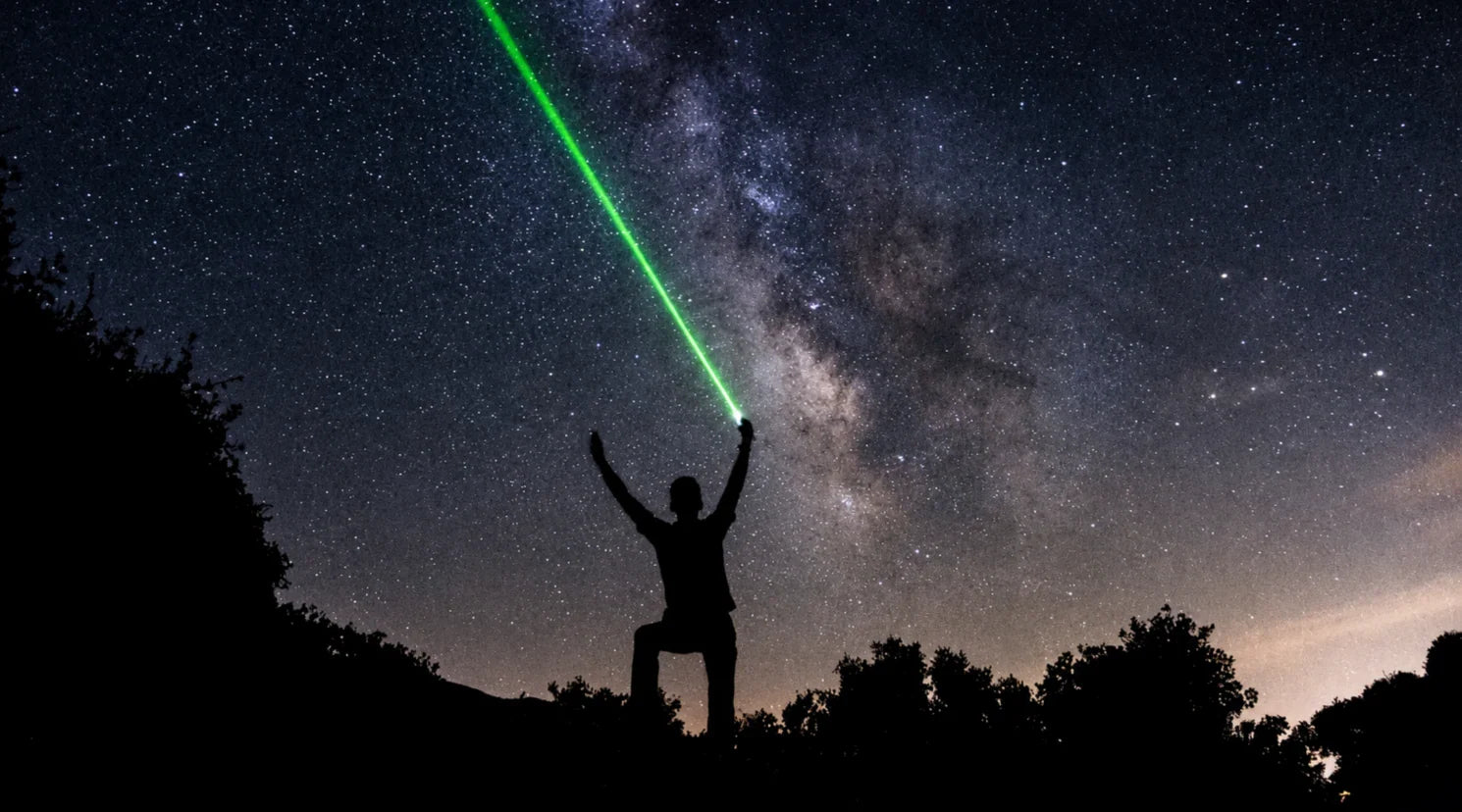
If you want the brightest beam for night sky tours, you should check out these top 532nm green lasers for stargazing: Hgyuskl Pro Series. Green laser pointers at 532nm stand out because your eyes see this color best in the dark. You get a clear, visible beam that makes night sky presentation lasers perfect for pointing out stars. Always look for real output power, strong build quality, and safe, legal stargazing laser pointers. A reliable 532nm green laser pointer makes your night sky experience amazing.
Key Takeaways
-
532nm green lasers are great for stargazing. They are very bright in the dark. This makes it easy to show stars and constellations.
-
Pick models with real output power. Make sure they are built strong. Look for safety features. These things help you have a safe and fun time stargazing.
-
Always follow safety rules when using lasers. Never point them at people or cars. This helps stop accidents and keeps you out of trouble.
-
Think about your surroundings when stargazing. Clear skies help you see better. Light pollution can make your laser beam harder to see.
Top 532nm Green Laser Stargazing Picks

Why These Lasers Stand Out
You need a 532nm green laser that is bright, safe, and reliable for your stargazing sessions. These models are picked because they have real power, strong build, and safety. Hgyuskl Pro Series is strong with its aluminum body and steady current drive.
Tip: Always follow safety rules. Do not point your laser at people, animals, or cars. Take out the safety key and keep the battery at 40% if you will not use it for a while. These models help you show constellations and guide groups easily.
Why 532nm Green Lasers for Stargazing
Visibility and Brightness
When you use a 532nm green laser pointer for stargazing, you notice the beam right away. The human eye responds best to light near 550nm. Green lasers at 532nm sit close to this sweet spot. You see the beam clearly, even in dark conditions. This makes it easy to point out stars and planets during night sky tours.
You don’t need much power to get a bright beam. The green light stands out against the night sky. You can guide a group and show constellations without struggling to find the beam. Many astronomy guides rely on green lasers because they work well in both clear and light-polluted skies.
Did you know? Green lasers are about 30 times brighter than red lasers at the same power level. You get more visibility with less energy.
Advantages Over Other Colors
You might wonder why green lasers beat red or blue ones for astronomy. The answer is simple. Green lasers are much more visible to your eyes. Red lasers often fade out in the dark. Blue lasers can look dim and sometimes confuse viewers.
Here are some reasons to choose green lasers for night sky tours:
-
Green beams show up best to dark-adapted eyes.
-
You use less power and still get a strong beam.
-
The beam stays clear in different lighting conditions.
-
Astronomers prefer green lasers for their clarity and effectiveness.
If you want a tool that helps you lead a group and point out celestial objects, green lasers are the top choice. You get safety, efficiency, and a beam everyone can see. That’s why 532nm green laser stargazing tools are so popular for astronomy.
Green Laser Reviews
You want the best tool for 532nm green laser stargazing. Let’s look at how each model performs in real-world astronomy and outdoor use. You’ll see what makes each laser pointer unique, and you’ll know which one fits your needs.
Hgyuskl Pro Series
If you need a laser pointer that stands up to tough conditions, the Hgyuskl Pro Series is your best bet. You get a heavy-duty build with aviation aluminum casing. The APC constant current drive keeps the power steady. Hgyuskl uses premium components, including direct green diodes, so you get true high power output every time.
-
Specs: Up to 5mW real output, 532nm wavelength, CR123 battery
-
Performance: The beam stays bright and visible, even in light-polluted skies. You can point out stars and constellations with ease.
-
Build Quality: The body feels solid. You won’t hear rattling or see loose parts. The laser is waterproof and ready for outdoor adventures.
-
Battery Life: CR123 battery lasts for hours. You can run night sky tours without worrying about power.
-
Safety Features: Built-in safety key, IR filter, and Class IIIa compliance. You stay within legal limits and protect your eyes.
-
Best Use Scenarios: Astronomy, stargazing tours, outdoor survival, wildlife control, and lab work.
Hgyuskl stands out because you get real specifications. You don’t have to worry about fake power claims. If you want a reliable tool for demanding jobs, this model delivers every time.
Generic 30mW Models
While you might be tempted by cheap Generic 30mW Models claiming extreme brightness, they are not recommended for beginners or public group tours. As noted in our safety section, most countries restrict public laser use to 5mW or less. The focus ring works smoothly, and the output stays stable for about 20 minutes. You get a basic build, but it’s enough for casual stargazing.
Here’s what users say:
|
Praise/Complaint |
Description |
|
Praise 1 |
Beam stays visible at dusk |
|
Praise 2 |
Focus ring works smoothly |
|
Praise 3 |
Stable output over 20 minutes |
|
Complaint 1 |
No serial number or compliance docs |
|
Complaint 2 |
Overheats after 8 minutes |
|
Complaint 3 |
Divergence worse than advertised |
A 30mW beam is exceptionally bright but carries significant eye-safety risks and legal liabilities if pointed near aircraft. Furthermore, generic models often lack built-in IR filters (Infrared filters) and stable heat management, causing them to overheat quickly. If you are a professional astronomer with the proper permits operating in extremely remote, light-polluted areas, you might consider higher output models, but for 99% of casual stargazers, a true 5mW laser is far safer and perfectly adequate.
Tip: Always check for real power and safety features before buying. You want a laser pointer that keeps you safe and follows local laws.
You now have a clear view of each model’s strengths. If you need a premium tool for 532nm green laser stargazing, Hgyuskl Pro Series leads the pack with its true output, rugged build, and professional-grade safety.
Performance in Different Conditions
Clear Skies vs. Light Pollution
You want your 532nm green laser stargazing pointer to shine bright, no matter where you are. The sky can change everything. On a clear night, you will see the green beam stretch far across the sky. The visibility can surprise you. Sometimes, you can point out stars and constellations several kilometers away.
When you move to a city or a place with lots of streetlights, things change. Light pollution makes the beam fade faster. You might only see the laser for 1–2 kilometers, even with a strong model. Here’s what you can expect:
-
In clear skies, a 532nm green laser can reach long distances. The beam stays sharp and easy to follow.
-
In heavy light pollution, the range drops. You may only get 1–2 km of visible beam, even with high-quality lasers.
-
The green color still stands out better than red or blue, so you can guide groups with confidence.
Tip: For city stargazing, pick a spot with less background light. Your laser will look brighter, and your group will see the beam more clearly.
Cold Weather and Battery Life
Cold nights make stargazing special, but they can drain your laser’s battery fast. You might notice the beam gets dimmer when the temperature drops. Batteries lose power in the cold, so you need to plan ahead.
-
Use fresh, high-quality batteries for every night sky tour.
-
Keep spare batteries in your pocket to keep them warm.
-
Choose lasers with rugged, weather-sealed builds and reliable CR123 lithium battery compartments, as lithium handles freezing temperatures much better than standard alkaline batteries.
If you want your 532nm green laser stargazing tool to last all night, check the battery before you head out. Cold weather can surprise you, but a little planning keeps your beam bright and your tour on track.
Note: Rechargeable batteries can lose charge faster in freezing weather. Always carry extras for long sessions.
Choosing the Right 532nm Green Laser
You want your stargazing experience with a 532nm green laser to be safe and bright. Picking the right laser means checking power, battery, safety, and how it feels. Let’s look at what matters most.
Output Power and Range
Output power shows how far your beam goes and how easy it is to see. For astronomy, you do not need a super strong laser. Most countries limit lasers for public use to 5mW or less. This keeps your group safe and follows the law. Lasers above 5mW are for professionals and need special permits.
|
Country |
Legal Limit for Laser Output Power |
|
Australia |
>1 mW is prohibited; Class 1 or 2 only |
|
Canada |
No specific regulations, but must comply with Radiation Emitting Devices Act |
|
United Kingdom |
Class 2 (<1 mW) for public use; removal of lasers above class 2 from market |
|
United States |
Class II or IIIa (<5 mW); more powerful lasers require safety features |
|
Europe |
Varies by country; most ban Class 3A and above |
|
South Korea |
Class II or lower permitted |
|
Singapore |
License required for lasers over class 3b |
If you want a beam that stands out, use 1–5mW. This range gives you a visible line for pointing out stars and keeps eyes safe.
Safe and Effective Use Tips
When you use a 532nm green laser stargazing pointer, you want to enjoy the night sky and keep everyone safe. These tools are powerful and bright, so you need to follow some important rules. Let’s look at how you can use your laser safely, lead great night sky tours, and stay within the law.
Laser Safety Guidelines
You should always treat your 532nm green laser stargazing tool with respect. International standards like IEC 60825 and ANSI Z136.1 set the rules for safe laser use. Here are the top safety tips:
-
Never point your laser at people, animals, vehicles, or aircraft—even from far away.
-
Avoid shining the beam on reflective surfaces like glass, water, or metal. Reflections can still cause harm.
-
Always use lasers with built-in safety features, such as safety keys and IR filters. Hgyuskl Pro Series includes these to help you stay protected.
-
Store your laser in a secure place when not in use. Remove the battery if you won’t use it for a while.
-
Check your laser’s class label and make sure it meets legal output limits.
Remember: Even a small mistake with a laser can cause eye injury or legal trouble. Stay alert and follow these guidelines every time.
Best Practices for Night Sky Tours
You want your 532nm green laser stargazing experience to be fun and safe for everyone. Here’s how you can lead a great tour:
-
Start each session by reminding your group about laser safety.
-
Only use your laser to point at stars or constellations—never at people or wildlife.
-
Clean the lens with a microfiber cloth and lens-safe solution. This keeps your beam sharp.
-
Store your laser in a cool, dry place. High heat can damage the internal crystals.
-
Choose a model with reliable safety features, such as physical safety keys, aperture shutters, and built-in IR filters to block harmful infrared radiation.
Tip: Always keep a close eye on your surroundings. If you see an aircraft, turn off your laser right away.
Legal and Local Regulations
Laws about laser pointers change from place to place. In many countries, you can only use lasers under 5mW for astronomy. Some places ban handheld lasers over 1mW without special permission. Breaking these rules can lead to fines or even criminal charges, especially if you point a laser near an airport.
-
Check your local laws before you buy or use a laser.
-
Only use lasers that meet legal standards and have proper labels.
-
Hgyuskl Pro Series follows international safety and legal guidelines, so you can use it with confidence.
Stay informed and follow the rules. Safe and legal use keeps stargazing fun for everyone.
Now you know which 532nm green lasers are best for stargazing. Green lasers are brighter than other colors. This makes them great for showing stars to groups at night. Here is a simple chart to compare:
|
Laser Wavelength |
Brightness |
Visibility |
|
532nm (Green) |
Highest |
Best for astronomy |
Pick lasers that have real power, good safety, and follow the law. If you want better astronomy tools, try trusted brands like Hgyuskl. You can also get more advice by joining astronomy clubs or going to star parties.
FAQ
What makes 532nm green laser stargazing pointers better than red or blue lasers?
You see green beams much more easily at night. The 532nm wavelength matches your eye’s peak sensitivity. This means you get a brighter, clearer beam for pointing out stars during night sky tours.
Are 532nm green lasers safe for astronomy?
Yes, if you use them responsibly. Always choose models under 5mW, like the Hgyuskl Pro Series. Never point your laser at people, animals, or aircraft. Use built-in safety features and follow local laws.
How far can a 532nm green laser stargazing pointer reach?
On a clear night, you can see the beam for several kilometers. In cities with light pollution, the range drops to about 1–2 kilometers. The green color still stands out better than other colors.
Can I use a 532nm green laser stargazing pointer in cold weather?
Yes! Models with rugged builds, like the Hgyuskl Pro Series, perform well in the cold. Keep your batteries warm in your pocket for the best results.
Share:
Safe Output 650nm Red Lasers for University Physics Demonstrations
Why High Visibility Green is the Standard for Amateur Astronomy