
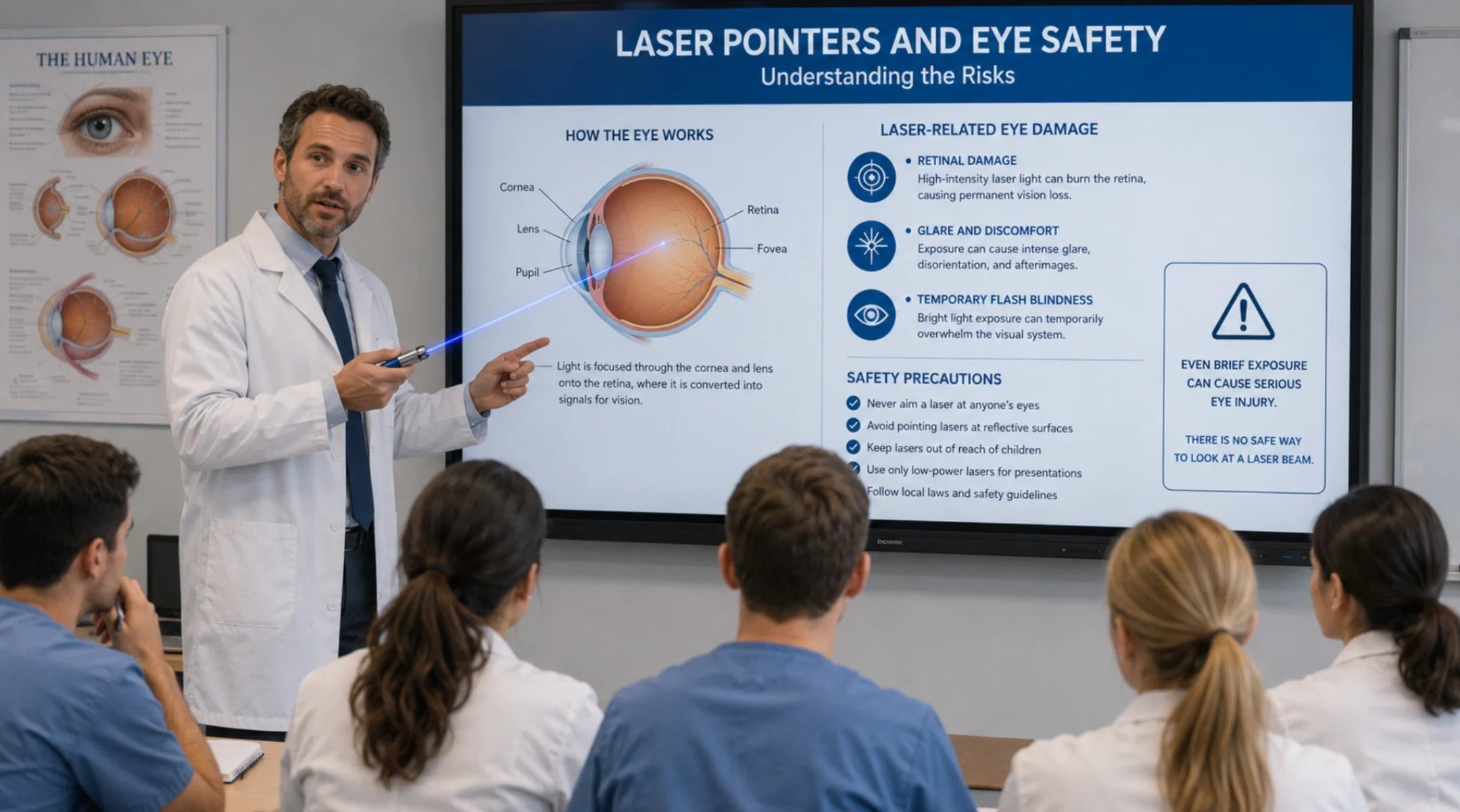
When you see the warning “Avoid exposure to beam” on a laser pointer, it means you should not allow the laser beam to enter your eyes or contact your skin. The warning applies to direct beam exposure and, in some cases, reflected beam exposure from shiny surfaces.
Possible risks include:
-
Losing your vision for a short time
-
Hurting your eyes forever
-
Bright glare that is dangerous for pilots and drivers
Key Takeaways
-
Always follow the warning to stay away from laser beams. Not listening can cause bad eye injuries.
-
Class 3B laser products can be hazardous to the eyes, especially during direct viewing or specular reflection from mirror-like surfaces. They should not be treated as ordinary consumer laser pointers.
-
Stay away from shiny things like mirrors when using a laser pointer. They can bounce the beam and hurt you.
-
Use the lowest power you need for your job. This helps lower the chance of getting hurt.
-
Teach others about laser safety. Make sure everyone knows the risks and how to use laser pointers safely.
Avoid Exposure to Beam Laser Pointer Warning

What the Warning Means
When you see “avoid exposure to beam laser pointer,” it means the laser beam can hurt you. This warning tells you to keep your eyes and skin away from the beam. The warning means you should avoid direct exposure to the laser beam and avoid hazardous reflections. The exact risk depends on the laser class, output power, wavelength, exposure duration, distance, and whether the beam is direct or reflected.
For lower-power pointers, the warning still matters because intentional staring can be unsafe. For higher-class laser products, the warning becomes more serious because direct or specularly reflected beams may cause injury much more quickly.
Tip: Always look at the laser class and power before you use any pointer. Class 3B lasers can hurt your eyes even if you see the beam for a short time.
Here is a table that shows the risks and safety points:
|
Exposure Type |
What It Means |
Why It Matters |
|
Direct beam exposure |
The beam enters the eye or contacts skin directly |
Highest concern for eye injury, especially with higher classes |
|
Specular reflection |
The beam reflects from mirror-like surfaces such as glass, metal, or mirrors |
Highest concern for eye injury, especially with higher classes |
|
Diffuse reflection |
The beam scatters from rough or matte surfaces |
Highest concern for eye injury, especially with higher classes |
|
Optical instrument exposure |
The beam or spot is viewed through binoculars, telescopes, cameras, or lenses |
Optical instruments can concentrate light and increase risk |
|
Public-safety exposure |
The beam distracts pilots, drivers, operators, or bystanders |
Can cause glare, flash blindness, distraction, and legal consequences |
Why Direct Exposure Is Dangerous
If you look at a laser pointer beam, it can hurt your eyes. You might get flash-blindness, afterimage, or glare. These problems can distract you and cause accidents. For example, pilots and drivers have had trouble seeing after being hit by a beam. The Nominal Hazard Zone (NHZ) is the area where the beam is not safe. If you go into this zone, you could get hurt forever.
-
Flash blindness can happen fast, but it usually goes away.
-
Sometimes, strong lasers can cause long-term eye damage, even if you see the beam for a short time.
-
Laser pointers can distract people and cause accidents, like car crashes.
-
If someone does not know why you are using a laser pointer, it can make things worse.
Hgyuskl’s strong lasers need careful use. Never point the beam at people, animals, or cars. Always follow the avoid exposure to beam laser pointer warning to keep everyone safe.
Here is a table showing safe exposure limits:
|
Laser Class |
Typical Output Direction |
What “Avoid Exposure to Beam” Means |
|
Class 2 |
Visible lasers up to 1mW |
Do not intentionally stare into the beam |
|
Class 3R / IIIa |
Visible lasers up to 5mW |
Avoid direct eye exposure and reflected exposure |
|
Class 3B / IIIb |
5mW–500mW |
Direct or specularly reflected exposure may be hazardous |
|
Class 4 / IV |
Above 500mW |
Direct, reflected, and sometimes diffuse exposure may be hazardous; strict controls required |
Diffuse vs. Specular Reflections
Not all reflections are the same. When a laser beam hits something, it can bounce back in different ways. Diffuse reflections scatter the beam from rough or matte surfaces, so they are usually less hazardous than direct or mirror-like reflections. However, with Class 4 lasers or close-range high-power exposure, even diffuse reflections may require caution.
|
Reflection Type |
Risk Level |
|
Diffuse Reflection |
Usually safe |
|
Specular Reflection |
Can be as dangerous as the direct beam |
Flat things like mirrors are the most risky. They can send the beam right into your eyes and hurt you. Rough or bumpy things make diffuse reflections, which are not as dangerous.
Note: Always look around for shiny or flat things before you use a strong laser pointer. Hgyuskl’s strong case and safe design help you use it safely, but you still need to be careful.
If you want to know more about laser pointer safety and classes, you can read about laser pointer classes and risks in the next section.
Laser Pointer Classes and Risks

Class Differences
It is important to know about laser pointer classes before using one. Each class has its own power and risk level. The warning to avoid exposure to beam laser pointer matters most for strong lasers. Here is a simple table to show the differences:
|
Class |
Power Output |
Risk Level |
|
Class 1 |
Enclosed or inherently low-risk design |
Generally low risk when used as designed |
|
Class 2 |
≤1mW |
Safe for daily use; your blink reflex protects your eyes. |
|
Class 3R |
1–5mW |
Needs care; can hurt your eyes if you look at the beam. |
|
Class 3B/4 |
>5mW |
Can burn skin and damage eyes; not for casual use. |
Groups like the FDA make these classes to keep people safe. They say every device must have clear labels and warnings. You should always check the class before you use a laser pointer.
Class 3B Hazards
Class 3B lasers are very strong tools. You need to be careful when you use them. If you do not follow safety rules, you could get hurt badly. The table below shows the main dangers:
|
Hazard Type |
Description |
|
Eye Injury |
Never look at the beam. Reflections can also hurt your eyes. The hazardous distance depends on output power, wavelength, beam divergence, exposure time, and viewing conditions. Do not rely on a single distance claim to judge safety. |
|
Skin Injury |
Not likely to burn, but can cause pain if you hold the beam on your skin. |
|
Fire or material risk |
Higher-class lasers, especially Class 4 products, may create fire or material-heating risks under unsafe conditions. |
|
Aircraft and Vehicle Safety |
Pointing at vehicles or planes is illegal and can cause accidents. |
Never point a Class 3B laser at people, animals, or cars. If you use these lasers the wrong way, you could get a fine or go to jail.
How to Compare Product Labels Before Buying
When comparing Hgyuskl models or any other laser brand, do not choose based only on advertised power or beam distance. Check the laser class, output power, wavelength, warning labels, safety features, manufacturer information, and user instructions.
For 532nm DPSS green lasers, an IR filter may be important because invisible infrared leakage can create additional safety risks. For 520nm direct-diode green lasers, the design is different, but buyers should still check the product’s safety information and laser class.
Safety Tips for Using Laser Pointers
How to Avoid Exposure
You should always follow the avoid exposure to beam laser pointer warning. This helps keep your eyes and skin safe. Here are some steps you can take:
-
Do not point a laser pointer at people. Use it only on things, not on animals or people.
-
Stay away from shiny things like mirrors or glass. These can bounce the beam back into your eyes.
-
Never look straight into the laser or use it with binoculars.
-
Pick the lowest power setting that works for what you need.
-
Keep laser pointers away from kids. Take out the batteries when you are done.
-
Make sure your laser pointer has clear labels and is registered if needed.
-
Learn how different wavelengths can affect you. Some colors can be more harmful.
Tip: Hgyuskl’s tough design and clear labels help you use high-power lasers safely. You can use them for astronomy, outdoor survival, wildlife control, and lab work. For more about laser classes and risks, see Laser Pointer Classes and Risks.
Safe Handling Practices
You must be careful when using laser pointers. Here are some good ways to stay safe:
-
Never shine the beam at someone’s eyes.
-
Do not point the laser at planes or cars. This is dangerous and against the law.
-
Use the laser only in a controlled environment and only for a clear, lawful purpose. Never aim it toward aircraft, vehicles, roads, people, animals, public spaces, or reflective surfaces.
-
Wear special glasses if you use very strong lasers.
-
Look around for shiny things before turning on the laser.
-
Hgyuskl’s strong metal cases keep the pointer safe in hard places. This makes it good for experts.
|
Contribution to Safe Handling |
|
|
Laser technology |
520nm direct-diode and 532nm DPSS designs have different safety considerations. For 532nm DPSS models, buyers should check whether effective IR filtering is included. |
|
Strong metal cases |
Makes the pointer tough and protects it in hard places. |
|
Clear compliance labeling |
Tells users about power and safety warnings. |
Emergency Actions
If someone gets hurt by a laser pointer, act quickly:
-
Move away from the beam right away.
-
Get medical help if you see vision changes, pain, or burns.
-
If a laser beam enters someone’s eye, stop exposure immediately. Do not rub the eye. Seek medical attention if there is pain, blurred vision, spots, afterimages, reduced vision, or any unusual visual symptoms.
-
Sometimes, surgery is needed, but this is rare.
-
Always tell your boss or safety officer about any accidents.
Note: Most injuries happen when people do not follow safety rules. You can stop accidents by being careful and using your laser pointer the right way.
You should always listen to the avoid exposure to beam laser pointer warning. This helps keep your eyes safe and stops accidents from happening.
Class 2 lasers are okay if you blink or look away fast, but never look right into the beam. Shiny things like glass can bounce the beam back and be just as strong as the main beam.
When you use real high-power devices like Hgyuskl, you must pay close attention. Using them the right way keeps you and others safe.
|
Safety Risk |
Description |
|
Permanent Blindness |
High-power lasers can hurt your eyes forever in just a tiny moment. |
|
Specular Reflections |
Shiny things can send beams far and still be dangerous. |
|
Aviation Hazard |
Lasers can make pilots unable to see, causing many problems every year. |
The safest choice is not simply the most powerful laser. Choose a product with clear labeling, realistic output information, appropriate safety features, and instructions that match your intended use and local regulations.
FAQ
What does "avoid exposure to beam laser pointer" mean?
You should never let your eyes or skin touch the laser beam. Even a quick look can cause harm. Always keep the beam away from people, animals, and reflective surfaces.
Can a laser pointer cause permanent eye damage?
Yes. Higher-class laser products, especially Class 3B and Class 4, may cause serious or permanent eye injury if the beam enters the eye directly or through a mirror-like reflection.
Why are reflections from shiny surfaces dangerous?
Reflections from mirrors or glass can send the beam right into your eyes. These specular reflections can be as strong as the direct beam. You should always check your surroundings before using a laser pointer.
How can I reduce exposure risk when using a laser pointer?
Use the lowest suitable output power, avoid direct and reflected exposure, check the laser class before use, keep the beam away from people, animals, vehicles, aircraft, and reflective surfaces, and store the device securely when not in use. Higher-class laser products require controlled conditions and proper protective equipment.
What should I do if someone gets exposed to the beam?
Move the person away from the beam right away. If you notice vision changes or pain, get medical help fast. Quick action can prevent further injury.
Share:
Green vs Red vs Blue Laser Pointers: Which Color Is Best for Your Use Case?
520nm vs 532nm Green Laser Pointer: Which Is Better for Outdoor Use?