
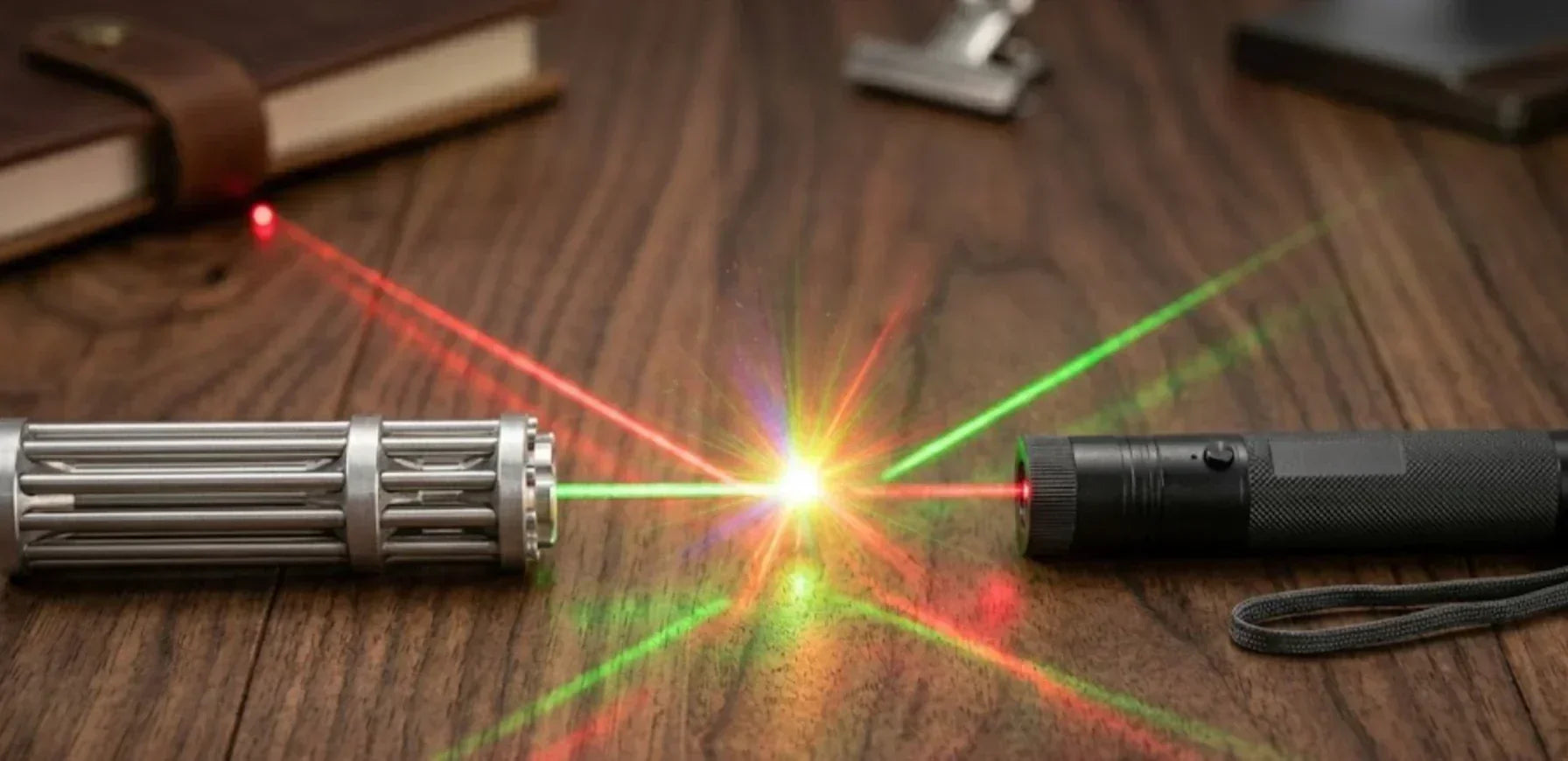
You want the best way to keep birds away from your farm. Studies and reports show that a green laser for geese works best for deterring them and other birds. Green laser pointers are more effective than red laser pointers for moving birds out of free-range poultry areas. The table below shows important results:
|
Study |
Findings |
Notes |
|
Efficacy of an automated laser for reducing wild bird visits to the free range area of a poultry farm |
Lasers lowered wild bird visits by more than 98% |
Only tested on one farm, results may change in other places |
|
Attacking Bird Flu With Lasers |
Lasers cut bird damage on corn by up to 70% |
Birds see green lasers better |
|
When Nuisance Birds Are Out Of Control… Use Lasers |
Green lasers give the best results |
Birds do not get used to green lasers |
-
Green laser pointers are easy to see in free-range poultry areas.
-
Wildlife control lasers help you keep your poultry safe and manage your farm effectively.
Key Takeaways
-
Green lasers work better than red lasers to keep birds away from farms. They can stop more than 98% of bird visits.
-
Birds can see green light more easily. This makes green lasers a good tool for controlling many kinds of birds, like geese and ducks.
-
Green lasers can be used during the day or at night. This helps keep birds away all the time, no matter how bright it is.
-
Safety is very important when using lasers. Wear safety gear. Do not point lasers at people or animals.
Green Laser Efficacy for Bird Control

How Green Lasers Affect Bird Behavior
When you use a green laser near your poultry, birds change their behavior right away. The laser acts like a wild bird repellent, so birds try to stay away from it. If you point the laser at birds, they leave the free-range area. Mallards and cormorants do not act the same. Mallards sometimes come back after the laser stops, but cormorants stay away longer. This shows that lasers work differently on different birds.
Green lasers can change how birds fly and where they nest. Birds can see green light well, so they react to it. When you use a commercial bird dispersal laser, birds leave places they usually stay. For example, hundreds of coots will leave a pond when you use a green laser. Lasers also work well at night for geese and cormorants. Many reports show that lasers are good for moving birds away.
You can control your poultry area with green lasers. Birds think the fast-moving laser beam is a real danger. This makes them want to leave, so your poultry stays safe.
Many studies and reports say green lasers work well. Automated lasers keep birds away from crops and help farms grow more food. In over 80% of tests, water birds like geese and gulls stay away from places with lasers. People in Western England used to use water hoses, but lasers worked better for them. In Oregon, lasers protected blueberry crops and showed they really work.
Hgyuskl's green lasers are strong and easy to see. They have a tough aluminum case and a steady power drive, so they last a long time. These features make Hgyuskl lasers great for farm bird control. To learn more about how they work, check our bird and wildlife control solutions.
Visibility of Green Lasers in Day and Night
You need a laser that works in all kinds of light. Green lasers are easy to see during the day and at night. Wild birds have special eye parts that let them see green light well, so green lasers work for free-range poultry control. Birds that are active at night, like mallards, react quickly to laser light in the dark. When you use a green laser at night, birds leave the area fast.
Green lasers are still easy to see during the day. Birds see the laser as a threat and leave the area. Lasers work just as well in daylight. You can keep your farm safe any time of day. Tests show lasers work well in all lighting.
-
Green lasers work well for keeping wild birds away because birds see green light.
-
You can control free-range poultry areas with green lasers.
-
Lasers work well both day and night.
You can trust Hgyuskl's green lasers to be bright and strong. The tough aluminum case and steady power drive help the laser last on the farm. For more about how green lasers help with free-range poultry, see our farm bird dispersal guide.
|
Lighting Condition |
Green Laser Visibility |
Bird Response |
Efficacy |
|
Day |
High |
Strong Avoidance |
Consistent |
|
Night |
Very High |
Immediate Dispersal |
Superior |
Green lasers give you the best results for free-range poultry control. You keep your farm safe and working well when you pick the right laser.
Red Laser Efficacy Compared to Green

Impact of Red Lasers on Birds
You might think about using a red laser for your poultry. Red lasers can change how birds act, but they do not work as well as green lasers. When you use a red laser, birds sometimes chase the red dot and move around more. Red lasers often fail in agricultural settings because they lack the necessary brightness in daylight. Worse, predatory birds and invasive waterfowl quickly realize the dull red beam poses no physical threat. They easily adapt to it, rendering the red laser useless for long-term farm protection.
But red lasers do not work as well for free-range poultry control. Birds can get used to the laser fast. After a while, they learn the laser is not dangerous. This makes the laser less useful for keeping birds away for a long time. Birds that nest or sleep in the area may stop reacting to the laser. Red lasers also do not work as well in big or busy free-range areas.
-
Red lasers can make poultry move more.
-
Birds can get used to the laser, so it works less.
-
Birds that nest or sleep may not react to the laser.
Visibility Limitations of Red Lasers
How well you can see the laser is important for poultry control. People can see green light better than red light. Green lasers look much brighter than red lasers, even if they are the same power. On a free-range farm, you need a laser that is easy to see in all kinds of light. Red lasers are hard to see in bright sunlight or outside. The beam can disappear, so the laser does not work as well for poultry control.
Red lasers also have problems in big or busy farm areas. Buildings and corners can block the laser, so it does not reach all birds. Birds in these spots may not see the laser, so it does not work. The table below shows some common problems with red lasers for poultry control:
|
Limitation |
Impact on Efficacy |
|
Bright sunlight |
Makes laser hard to see |
|
Nesting or roosting birds |
Birds do not react much |
|
Complex free-range structures |
Laser cannot reach all birds |
|
Bird adaptation |
Laser works less over time |
Note: For poultry control, you need a laser that works well all the time. Red lasers often cannot do this on a modern free-range farm.
You should think about these things when picking a laser for your farm. How well the laser works depends on how easy it is to see, how birds act, and how your farm is set up.
Practical Considerations for Farm Use
Range and Lighting Conditions
You should think about how far the laser can reach and the light around you. Green lasers work about eight times better than red lasers for moving birds away. You can use green lasers to cover big areas, even if birds are far from the main spot. Birds see bright green lasers as a threat, especially when it is dark. Red lasers do not work well in bright sunlight. This means you might not be able to move birds during the day. When the light outside gets brighter, lasers are harder to see. This makes it tough to watch birds in your area.
-
Green lasers are good for bird control in both day and night.
-
Red lasers do not work well when it is bright and may not move birds.
-
Green lasers can help you control birds in big areas.
|
Laser Type |
Range in Free-Range Area |
Daylight Efficacy |
Night Efficacy |
|
Green |
Wide coverage |
High |
Superior |
|
Red |
Limited |
Low |
Moderate |
Safety and Handling
You need to be careful when you use lasers on your farm. Do not point the laser at people or animals you do not want to scare. Wear special glasses, gloves, and clothes to protect yourself. Watch out for shiny things like glass or rocks. These can bounce the laser in a new direction. Keep lasers away from dry things like straw, leaves, or paper. These can catch fire if the laser hits them. If you follow these steps, you keep your farm safe and clean.
-
Always use lasers safely on your farm.
-
Keep lasers away from dry things to stop fires.
-
Wear safety gear when you use lasers.
Durability and Maintenance
You want your lasers to last a long time on your farm. Pick lasers with strong cases and steady power for your area. Green lasers with tough metal bodies do not break easily and work in bad weather. Check your laser often to find problems early. Clean your lasers after you use them to get rid of dust and dirt. Store lasers in dry places so they do not get wet. If you take care of your lasers, you can keep your birds safe.
-
Choose strong lasers for your farm.
-
Clean and store lasers the right way.
-
Check lasers often to make sure they work well.
If you think about range, light, safety, and how long lasers last, you can do a better job keeping birds away. The right laser helps your birds stay safe and your farm do well.
Green Laser for Geese and Other Birds
Effectiveness on Geese and Waterfowl
You want a way to keep geese and waterfowl away. A green laser for geese is the best tool for this job. Farms in Europe and North America have used green lasers and seen good results. Lasers work because birds see green light very well. Geese notice the bright green beam fast, even when the sun is out. They move away from the area, so your crops and fields stay safe.
Farm studies show how well green lasers work. For example, a project in Mandø, Denmark, tested green lasers for geese. The table below shows what they found:
|
Key Findings |
Description |
|
Location |
Mandø, Denmark |
|
Purpose |
To see if lasers can move geese from farm fields |
|
Results |
Lasers made geese eat less, so crops grew better |
|
Challenges |
It takes a lot of work to watch and use lasers, especially when there are many birds |
|
Recommendations |
Machines can help, but they cost a lot at first; using lasers by hand lets you aim at certain flocks and not scare other animals. |
You can use a green laser for geese to move flocks without hurting them. This way is safe and does not kill birds. The color of the laser matters. Birds see green light best, so a green laser for geese works the best. For more facts, check our farm bird dispersal guide.
Tip: Pick a green laser for geese with a 520nm diode. This makes it bright and strong for outdoor use.
Bird Dispersal Across Different Species
You want something that works for more than just geese. While highly effective on geese, green lasers are equally powerful against a wide variety of invasive species, including ducks, cormorants, and starlings. Our technology isn't limited to one pest; it acts as a universal deterrent.. Green lasers work for many kinds of birds. Farms have seen fewer birds, from 70% to 99% less, after using green lasers. For example, a blueberry farm had 99% fewer birds, so their crops were safe.
Green lasers work because birds think the moving light is a predator. This makes them fly away fast. You do not need to worry about birds getting used to the laser. They do not stop being scared, so the laser keeps working well. You can use green lasers with other tools to keep birds away and protect your farm.
-
Green lasers give you:
-
A safe way to move geese and other birds
-
Good results for many types of birds
-
The laser keeps working over time
-
Easy to use with other bird scaring tools
If you want to know more about picking a laser for your farm, see our bird and wildlife control solutions. You can count on green lasers to keep birds away and help your farm.
Cost and Availability
Price Comparison
You want to know how much a laser for bird control costs. Prices can change a lot based on the type and power of the device. For free-range layer farms, you need to plan your budget before you buy.
While massive automated systems can cost upwards of $10,000, they are rigid and expensive to maintain. Premium handheld devices—typically ranging from $200 to $800—offer the ultimate flexibility. A professional-grade Hgyuskl handheld laser allows you to actively patrol your property, instantly targeting specific flocks hidden in complex terrain where automated beams cannot reach.
You see that green lasers for a free-range area often cost more than red lasers. The higher price comes from better visibility and stronger results. You get more value when you protect your free-range layer farms from bird damage. You also save money on lost crops and repairs.
Market Options for Farms
When choosing a laser for your pasture or poultry farm, the market offers two main solutions: automated and handheld. Automated systems are ideal for massive commercial operations spanning up to 100 hectares. However, for most free-range environments, handheld devices like those from Hgyuskl provide a cost-effective, precise way to target specific flocks without the heavy setup costs.
-
Handheld devices give you a cost-effective way to target birds in a free-range area. These tools work well for small farms or when you need to move birds from one spot. Prices for handheld lasers range from $200 to $800.
You should match your choice to the size of your free-range area and your farm’s needs. Automated systems fit large free-range layer farms. Handheld lasers work well for smaller free-range layer farms or for spot control in a free-range area. You can find both options from brands like Hgyuskl, which offer professional-grade solutions for every free-range area.
Tip: Review your free-range area and bird pressure before you buy. The right laser helps you keep your free-range layer farms safe and productive.
Recommendations for Bird Dispersal
Choosing Based on Farm Size
You should pick a laser that fits your farm’s size. Big farms need automated green laser systems. These cover large areas and save work. They are good for moving birds like geese and ducks. Small farms do better with handheld green lasers. You can point these at certain flocks and change your plan fast. Both types work well, but think about how many birds you have and how your land looks.
-
Large farms: Use automated systems for wide areas and steady results.
-
Small farms: Use handheld lasers for quick and focused bird control.
-
Always check how many birds you have and how your farm is set up before you choose.
Matching Laser to Bird Species
Different birds act in their own way when they see lasers. Studies show that geese, ducks, and wild birds react a lot to green lasers. For example, a study found green lasers stopped almost all wild duck visits on a laying hen farm. Canada geese also stay away when you use the laser, but they might come back later. Most wild birds see green light well, so green lasers work best for bird dispersal. Some birds, like mallards, might get used to the laser after a while. Watch how birds act and change your plan if you need to.
Tip: Use a wide beam and move it around for better results with different birds.
Environmental Factors
The weather and land can change how well your laser works. The table below shows important things to think about:
|
Environmental Factor |
Impact on Laser Efficacy |
|
Weather Conditions |
Can make it harder to see the laser or change how birds act |
|
Terrain Types |
Can change how the laser reaches birds |
Birds see green light best, so green lasers still work well even when things change. Red lasers do not work as well, especially when it is sunny or the land is not flat. Always think about your weather and land before you pick a laser for your farm.
You can keep birds away and protect your farm when you pick the right laser for your needs.
You get the best results for farm bird control when you use a green laser for geese and other birds. Studies show that lasers offer a safe, effective, and species-specific solution. Many farms report fewer bird visits and less crop loss after switching to green lasers.
-
Green lasers work well for both small and large farms.
-
You can use them for geese, starlings, and other common pests.
-
Hgyuskl offers professional-grade tools that last and keep your farm safe.
FAQ
What makes a green laser for geese more effective than a red laser?
Green lasers work better for geese because birds see green light easily. The bright green color makes birds want to leave fast. For more facts, check our farm bird dispersal guide.
Is a green laser safe for use around livestock and crops?
Green lasers are safe if you use them the right way. Do not shine the laser in eyes or on shiny things. Always read the safety rules that come with your device.
How far can a green laser reach on a typical farm?
A strong green laser can cover big fields, sometimes hundreds of meters. The real distance depends on the weather and land. Pick a laser made for outdoor use to get the best results.
Will birds get used to the green laser over time?
Birds do not usually get used to green lasers for geese. The moving light keeps birds scared and makes them leave. Change how you use the laser to keep it working well.
Can I use a green laser for other pests besides geese?
You can use green lasers for ducks, cormorants, starlings, and other farm pests. Green lasers work for many kinds of birds, so they are good for wildlife control.
Share:
Artikel ett: Det praktiska värdet av blå laserpekare i utomhusaktiviteter
Why a True High Power 450nm Blue Laser is a Survival Must Have